
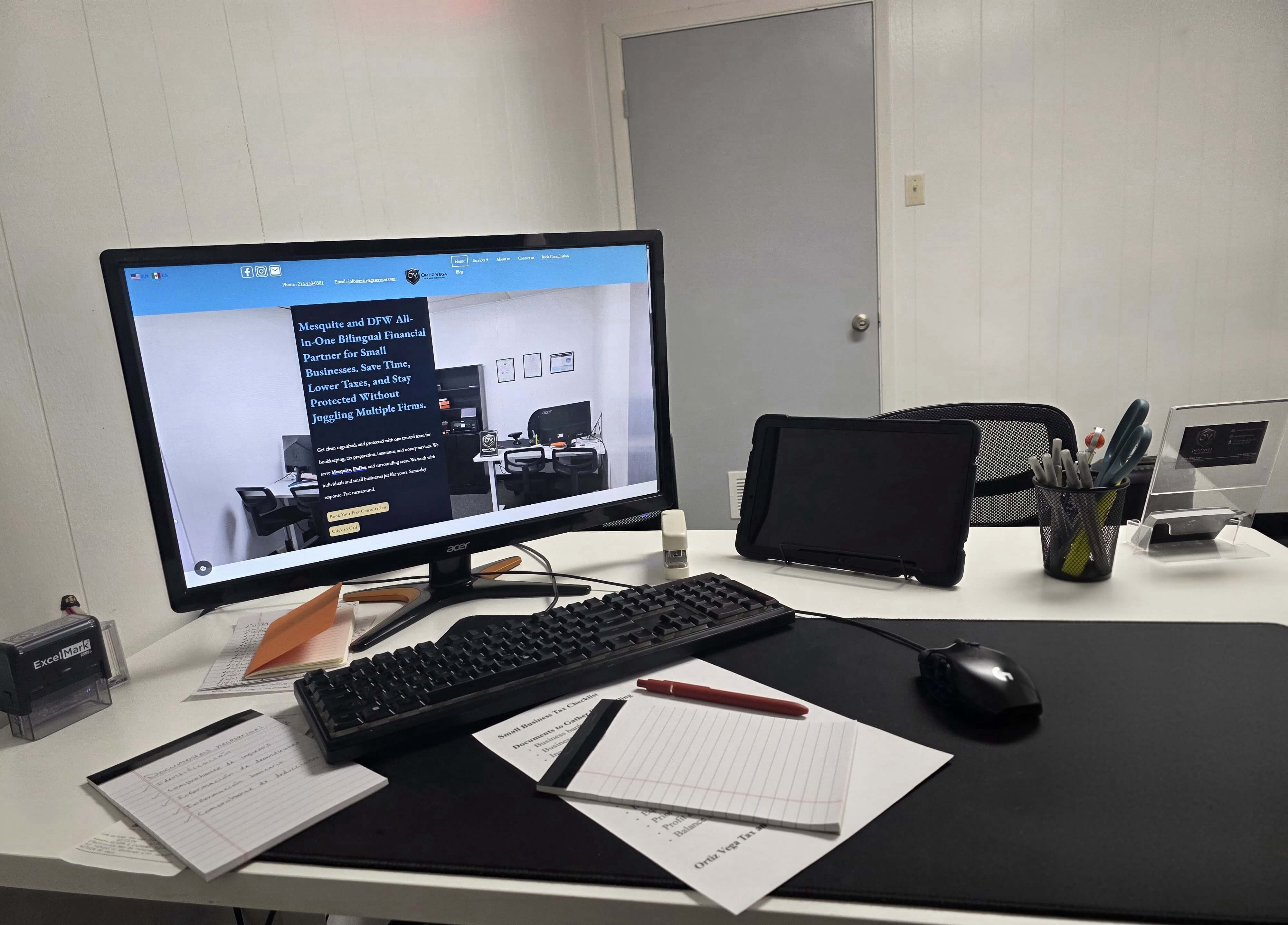
Small Business Tax Preparation Checklist for Mesquite, TX Business Owners
Running a small business in Mesquite, Dallas, or the surrounding area takes a lot of work. Between serving customers, managing employees or contractors, paying bills, keeping up with insurance, and trying to stay profitable, tax preparation can easily get pushed to the last minute.
The problem is that business tax preparation is not just about filing a tax return. It starts with having organized records, clean bookkeeping, accurate income totals, clear expense categories, and proof for the deductions being claimed.
This checklist is designed to help Mesquite small business owners understand what to gather before filing their business taxes, what records matter, and when bookkeeping cleanup may be needed before the tax return can be prepared correctly. For more year-round help, read our guide on common tax mistakes small business owners make in Mesquite.
Whether you own a restaurant, roofing company, cleaning business, trucking company, construction business, beauty salon, retail shop, landscaping business, or another local service business, this guide can help you get better organized before tax season.
Why Small Business Tax Preparation Is Different From Personal Tax Filing
Personal tax filing is usually based on documents such as W-2s, 1099s, dependents, mortgage interest, school forms, and other personal tax documents.
Small business tax preparation is different because the tax return depends heavily on the business records. A business owner may need to provide:
- Total income
- Business expenses
- Bank statements
- Credit card statements
- Contractor payments
- Payroll reports
- Receipts
- Mileage records
- Loan records
- Equipment purchases
- Insurance records
- Prior year tax returns
- Bookkeeping reports
For business owners, the quality of the tax return depends on the quality of the records. If the bookkeeping is incomplete, messy, or behind, it can make tax preparation more stressful and may cause deductions to be missed.
Basic Documents Every Small Business Owner Should Gather
Before filing your business taxes, start by gathering the documents that show your business income, expenses, payments, and financial activity for the year.
Business Information
Have these basic business details ready:
- Legal business name
- DBA name, if applicable
- EIN letter
- Business address
- Entity type, such as sole proprietor, LLC, partnership, S corporation, or corporation
- Prior year tax return
- Business bank account information
- Business credit card information
- Accounting software access, if applicable
If you changed your business address, ownership structure, business name, or entity type during the year, let your tax preparer know.
Income Records to Organize
Your tax preparer needs to know how much money your business received during the year. This includes more than just deposits into the bank account.
Gather records for:
- Cash sales
- Credit card sales
- Zelle payments
- Cash App payments
- Venmo payments
- Checks received
- Bank deposits
- Online payments
- 1099-K forms
- 1099-NEC forms received
- Customer invoices
- Sales reports from POS systems
- Third-party app income
- Marketplace income, if applicable
A common mistake small business owners make is only counting income that appears on a 1099 form. Even if income was not reported to you on a 1099, it may still need to be included.
Expense Records to Organize
Business expenses help show the cost of operating your business. The cleaner your expense records are, the easier it is to prepare the return and understand where your money went.
Gather records for:
- Rent
- Utilities
- Supplies
- Materials
- Inventory
- Repairs
- Maintenance
- Advertising
- Website costs
- Business cards
- Software
- Phone and internet
- Insurance
- Professional services
- Bank fees
- Merchant processing fees
- Office supplies
- Contractor labor
- Employee wages
- Payroll taxes
- Vehicle expenses
- Mileage records
- Meals related to business
- Equipment purchases
- Tools
- Uniforms
- Licenses and permits
Do not rely only on memory. Try to support expenses with receipts, statements, invoices, or reports.
Bookkeeping Reports to Have Ready Before Filing
If your business uses bookkeeping software such as QuickBooks, you should have reports ready before filing. These reports help organize the year and make tax preparation easier.
Important bookkeeping reports include:
Profit and Loss Statement
A profit and loss statement shows your income, expenses, and net profit or loss. This is one of the most important reports for business tax preparation.
Balance Sheet
A balance sheet shows what the business owns, what it owes, and the owner’s equity. This is especially important for partnerships, corporations, and S corporations.
General Ledger
The general ledger shows detailed transaction activity. This can help review unusual expenses, transfers, owner draws, deposits, and corrections.
Bank Reconciliation Reports
Bank reconciliation helps confirm that your bookkeeping matches your bank statements. If the bank account is not reconciled, the books may not be accurate.
Accounts Receivable Report
This shows money customers owe your business.
Accounts Payable Report
This shows bills or vendor amounts your business owes.
If your bookkeeping is not updated, your tax return may take longer to prepare. In some cases, bookkeeping cleanup may be needed before accurate business taxes can be filed. Business owners who are unsure whether they need monthly help can also read our guide: Do I Need a Bookkeeper for My Small Business in Mesquite, TX?
Common Tax Deductions Small Business Owners Forget
Every business is different, but many small business owners forget to track expenses that may matter at tax time.
Common categories include:
- Advertising and marketing
- Website costs
- Business software
- Office supplies
- Cleaning supplies
- Tools and equipment
- Contractor payments
- Professional services
- Insurance
- Business phone use
- Internet expenses
- Vehicle mileage
- Repairs and maintenance
- Merchant fees
- Bank fees
- Licenses and permits
- Continuing education
- Business meals
- Uniforms or branded clothing
- Rent or workspace costs
The important thing is not just knowing the expense happened. The business owner should be able to show what was paid, when it was paid, who was paid, and how it was related to the business.
Contractor Payments and 1099s
Many small businesses pay contractors during the year. This is very common for restaurants, construction companies, roofing companies, cleaning businesses, transportation companies, and service businesses.
If you paid contractors, gather:
- Contractor names
- W-9 forms
- Payment totals
- Payment dates
- Payment method
- Copies of checks, Zelle payments, bank transfers, or other proof of payment
- Contractor invoices
- 1099 records
If you paid workers through Zelle, Cash App, checks, cash, direct deposit, or bank transfer, those payments still need to be tracked correctly. The payment method does not replace proper bookkeeping.
This is also why it is important to request a W-9 from contractors before paying them. Waiting until tax season to collect contractor information can make 1099 filing more difficult.
Payroll Records to Gather
If your business has employees, payroll records are very important.
Gather:
- Payroll reports
- W-2 records
- Employer payroll tax reports
- Employee wages
- Payroll tax payments
- Health insurance records, if applicable
- Retirement plan records, if applicable
- Workers’ compensation insurance records, if applicable
Payroll should be handled carefully because employee wages, payroll taxes, and employment tax records affect both tax preparation and compliance.
Vehicle and Mileage Records
Many business owners use a vehicle for business. This can include driving to job sites, picking up supplies, meeting clients, making deliveries, or traveling between business locations.
Helpful vehicle records include:
- Mileage log
- Business purpose of trips
- Date of trips
- Starting and ending mileage
- Gas receipts
- Repairs and maintenance
- Insurance
- Registration
- Lease or loan documents
- Vehicle purchase documents
A mileage estimate made at the end of the year is usually not as strong as a proper mileage log. Keeping mileage updated throughout the year is much better.
Business Insurance Records
Small business owners should also organize insurance records. Insurance may affect both bookkeeping and tax preparation.
Examples include:
- General liability insurance
- Commercial auto insurance
- Property insurance
- Workers’ compensation insurance
- Professional liability insurance
- Surety bonds
- Business owner policy
- Insurance premium payments
- Insurance refunds
- Claim payments, if applicable
Insurance records can help show business expenses and also help the owner understand whether coverage needs changed as the business grows.
Loan and Debt Records
If your business has loans, credit lines, or financing, those records should be reviewed before filing.
Gather:
- Business loan statements
- Credit line statements
- Equipment financing records
- Vehicle loan records
- Interest paid
- Principal paid
- Loan agreements
- Year-end statements
Loan payments are not always treated the same way as regular expenses. Part of the payment may be principal, and part may be interest. This is one reason accurate bookkeeping matters.
Equipment, Tools, and Large Purchases
If your business bought equipment, tools, furniture, computers, vehicles, trailers, appliances, machinery, or other large items, keep those records separate from regular small expenses.
Gather:
- Purchase receipts
- Financing documents
- Date purchased
- Cost
- Description of item
- Business use percentage
- Serial numbers, if applicable
Large purchases may need to be handled differently from regular expenses. Your tax preparer will need to know what was purchased, when it was purchased, and how it is used in the business.
What If Your Books Are Behind or Messy?
Many small business owners wait until tax season to organize everything. This is common, but it can create problems.
Messy or incomplete books can lead to:
- Missed deductions
- Higher tax preparation cost
- More stress
- Delayed filing
- Incorrect income totals
- Duplicate expenses
- Missing contractor payments
- Confusion about true profit
- Difficulty answering tax questions
- Problems separating personal and business expenses
If your books are behind, the first step is to organize bank statements, credit card statements, receipts, invoices, payroll records, and contractor payments. Then the bookkeeping can be cleaned up before the tax return is prepared.
At Ortiz Vega Tax and Insurance, we help small business owners in Mesquite and Dallas organize their bookkeeping so their tax preparation is based on clearer, cleaner numbers.
Small Business Tax Preparation Checklist
Use this checklist before meeting with your tax preparer:
- Business name
- EIN
- Entity type
- Prior year tax return
- Business bank statements
- Business credit card statements
- Profit and loss statement
- Balance sheet
- General ledger
- Bank reconciliation reports
- Sales reports
- Invoices
- Cash income records
- 1099 forms received
- Receipts for expenses
- Payroll reports
- W-2 records
- Contractor W-9 forms
- Contractor payment totals
- 1099 records
- Loan statements
- Insurance records
- Vehicle mileage log
- Equipment purchase receipts
- Rent records
- Utility records
- Software subscriptions
- Advertising expenses
- Estimated tax payment records
- Business licenses and permits
- Notes about major business changes
- Questions for your tax preparer
The more organized these records are, the smoother the tax preparation process usually becomes.
How Long Should Small Business Owners Keep Records?
Business owners should keep records that support the income, expenses, deductions, and credits reported on the tax return.
Examples of records to keep include:
- Tax returns
- Receipts
- Bank statements
- Credit card statements
- Payroll records
- Contractor records
- Invoices
- Mileage logs
- Asset purchase records
- Loan documents
- Insurance records
Employment tax records should generally be kept for at least four years. Some records may need to be kept longer depending on the situation.
When in doubt, it is better to keep important business records organized and stored safely instead of throwing them away too soon.
When Should a Mesquite Business Owner Hire a Bookkeeper?
A bookkeeper can help throughout the year, not just at tax time.
You may need bookkeeping help if:
- You do not know your monthly profit
- Your bank accounts are not reconciled
- Business and personal expenses are mixed
- Receipts are missing
- Contractors were paid but not tracked
- You only organize records once per year
- You are unsure what expenses belong in each category
- You are behind on QuickBooks
- You feel stressed every tax season
- You are growing and need cleaner financial records
- You want to understand your business numbers better
Bookkeeping is not just data entry. Good bookkeeping helps business owners understand income, expenses, cash flow, profit, and tax preparation needs.
Why Work With a Local Bilingual Tax and Bookkeeping Team in Mesquite?
Working with a local tax and bookkeeping team can make the process easier, especially when you want clear explanations and personal service.
Ortiz Vega Tax and Insurance helps small business owners with:
- Business tax preparation
- Individual tax preparation
- Bookkeeping
- Commercial insurance
- Personal insurance
- Surety bonds
- Notary public services
We serve business owners in Mesquite, Dallas, and nearby areas. We also offer bilingual service in English and Spanish.
Our goal is to help business owners file correctly, stay organized, understand what they are filing, and feel more prepared throughout the year.
Everything can be done in person or online.
Frequently Asked Questions
Do I need bookkeeping before filing my business taxes?
If your income and expenses are already organized, you may not need cleanup. However, if your books are behind, incomplete, or mixed with personal expenses, bookkeeping may need to be cleaned up before filing.
Can I file business taxes if my books are behind?
Yes, but your books may need to be organized first. Filing with incomplete records can lead to missed deductions, incorrect reporting, or delays.
What documents do I need for small business tax preparation?
You may need income records, expense receipts, bank statements, credit card statements, payroll records, contractor payment records, loan statements, insurance records, bookkeeping reports, and prior year tax returns.
Do I need a separate business bank account?
A separate business bank account is strongly recommended. It makes bookkeeping cleaner and helps separate business activity from personal spending.
What if I paid contractors through Zelle or Cash App?
Those payments should still be recorded in your bookkeeping. You should keep records showing who was paid, how much was paid, when they were paid, and what the payment was for.
Do you help Spanish-speaking business owners?
Yes. Ortiz Vega Tax and Insurance provides bilingual service in English and Spanish for tax preparation, bookkeeping, insurance, surety bonds, and notary services.
Can everything be done online?
Yes. Everything can be done in person or online.
Need Help Getting Your Books Ready Before Filing?
If your business records are organized, tax season is usually much easier. If your books are behind, messy, or missing important details, it is better to fix them before filing instead of waiting until the last minute.
Ortiz Vega Tax and Insurance helps Mesquite and Dallas small business owners with bookkeeping, business tax preparation, insurance, surety bonds, and notary services.
We are a local bilingual team focused on helping business owners stay organized, file correctly, and understand what they are filing.
Schedule an appointment call us:
Marco Ortiz Vega: (214) 433-0381
Ana Ortiz: (972) 837-0807